
How to Drill Stone Precisely Without Risk: A Guide to Diamond Core Bits
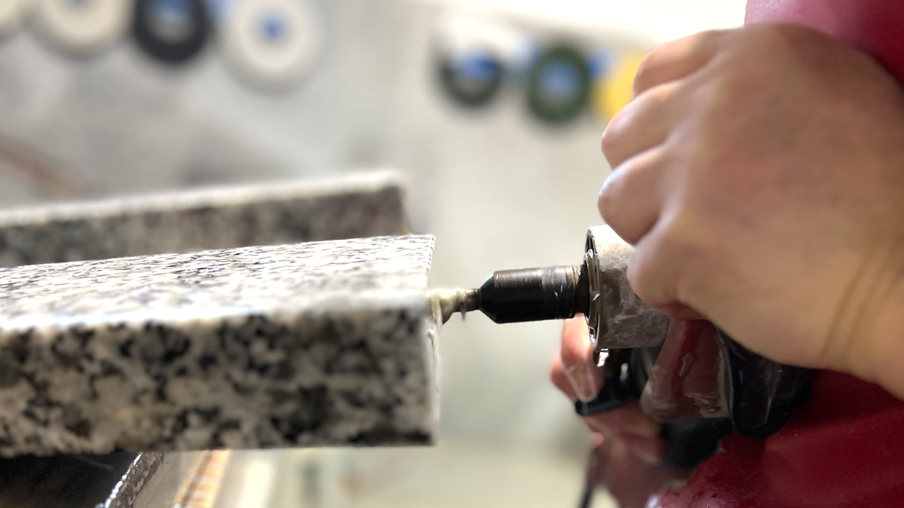
Drilling holes on the very edge of thin stone slabs, whether natural or engineered, presents a significant challenge. Using traditional drilling methods often leads to material cracking or inaccurate results. The solution lies in high-quality diamond core and shank bits designed for wet drilling, ensuring clean cuts even in the most demanding conditions.
Our drill bits feature an M14 thread, which is the standard fitting for most angle grinders and stone polishers. With our optional adapters, you can also easily use these bits with a standard power drill.
Frequently Asked Questions (FAQ)
Which materials can these drill bits be used on? Our tools deliver excellent results on all types of natural and engineered stone. While not primarily designed for glass, field experience has shown high efficiency even with this material.
Can I use the hammer/impact setting? Absolutely not. The impact function would cause irreparable damage to the diamond segment and the tool itself. Drilling must be smooth and steady.
Is water cooling necessary? Yes, to maintain the tool's lifespan, the manufacturer requires internal water cooling. Water serves two purposes: it cools the diamond bond and flushes out the slurry (drilled material). Pro Tip: While we have seen cases where a 35 mm bit drilled dozens of holes dry (with frequent manual cooling), we do not recommend this. Damage caused by overheating during dry use will void the warranty.
How do I drill a precise hole if the bit has no pilot/center point? When using a polisher (max. 6,000 RPM), the most critical part is the start of the hole. If you experience vibration, we recommend a simple trick: drill a pilot hole into a piece of scrap tile or wood. Secure this template to your material with clamps—this will guide the bit for a perfectly precise hole without slipping.
Can these bits be used on CNC machines? Yes. For CNC machine mounting, we offer a special adapter to convert the M14 thread to G1/2".
How much pressure should I apply while drilling? Do not use excessive force. In most cases, the weight of the machine is sufficient. During drilling, we recommend slightly lifting the bit periodically to allow water to flush out debris. Avoid circular "wobbling" motions, as this wears down the sides of the segment and shortens the tool's life.

Pavol Šáray
CEO & Technical Expert at DiaSegment
I spend most of my time in the field with customers, searching for the best solutions for their specific projects directly on construction sites or in stonemasonry workshops. These field visits are my greatest inspiration – I transform these real-world insights into technical articles to help others navigate the industry. Since I am often fully engaged on-site, I may not be reachable immediately, but I will be happy to give your inquiries my full attention as soon as possible.
✉️ Email: diamantovenastroje.cz@gmail.com
📞 Phone: +421 903 528 039
Available on business days 8:00 AM – 4:00 PM.
If I'm unavailable, please send me an SMS or WhatsApp, and I'll get back to you.